Web Performance: Why Page Speed Directly Affects Sales
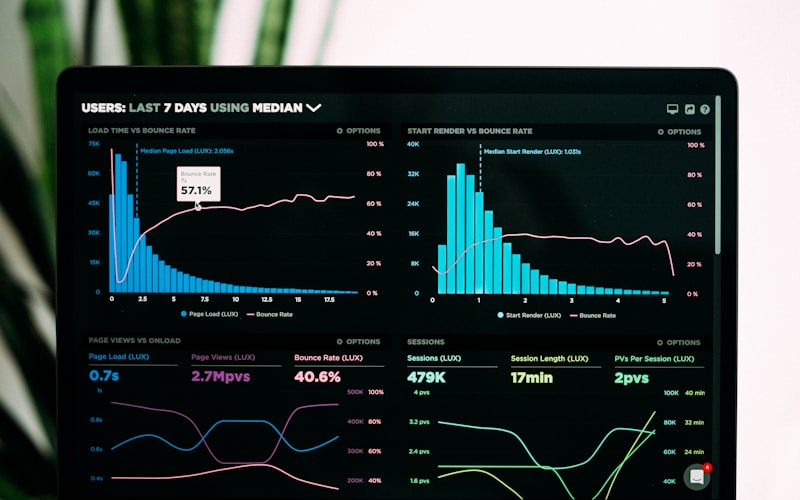
Google has confirmed that loading speed is one of the ranking factors. But beyond SEO, speed directly affects your revenue. Amazon calculated that 1 second of delay would cost them 1.6 billion dollars annually.
How Fast is Your Website?
Test your website on: - **Google PageSpeed Insights** (pagespeed.web.dev) - **GTmetrix** (gtmetrix.com) - **WebPageTest** (webpagetest.org)
Aim for: - LCP (Largest Contentful Paint) < 2.5s - FID (First Input Delay) < 100ms - CLS (Cumulative Layout Shift) < 0.1
Why Does Speed Matter?
For Users: - 53% of users abandon a page if it takes longer than 3 seconds to load - 79% of dissatisfied users won't return - Users on mobile networks are even more impatient
For SEO: - Google uses Core Web Vitals as a ranking factor - Faster pages rank better - Google bot can index more pages if they're fast
For Conversions: - Walmart found a 2% increase in conversions for every second of speed improvement - Vodafone improved LCP by 31% and saw 8% more sales - Pinterest reduced loading time by 40% and saw 15% more registrations
Most Common Causes of Slow Loading
1. Unoptimized Images Images account for an average of 50% of total page size.
Solutions: - Use WebP or AVIF format instead of JPEG/PNG - Compress images (TinyPNG, Squoosh) - Use responsive images (srcset) - Lazy loading for images below the fold
2. Too Much JavaScript Every kilobyte of JS must be downloaded, parsed, and executed.
Solutions: - Code splitting — load only what's needed - Tree shaking — remove unused code - Defer/async for script tags - Avoid heavy libraries where not necessary
3. Bad Hosting Cheap shared hosting can be the cause of all problems.
Solutions: - VPS or cloud hosting for better performance - CDN (Content Delivery Network) for global distribution - HTTP/2 or HTTP/3 for faster downloads
4. Lack of Caching Every visit loads everything from scratch.
Solutions: - Browser caching for static resources - CDN cache - Service Worker for offline access
5. Render-Blocking Resources CSS and JS that block page rendering.
Solutions: - Critical CSS inline in head - Async/defer for JS - Preload for key resources
Practical Optimization Tips
Quick Wins (1-hour implementation): 1. Compress all images 2. Enable GZIP/Brotli compression on the server 3. Add caching headers 4. Use lazy loading for images
Medium Effort (1-day implementation): 1. Implement a CDN 2. Optimize fonts (font-display: swap) 3. Minify CSS and JS 4. Remove unnecessary plugins/libraries
Larger Projects (1-week+ implementation): 1. Migrate to better hosting 2. Implement Server-Side Rendering 3. Code splitting and lazy loading components 4. Service Worker for caching
Conclusion
Investing in page speed has a direct return in the form of better SEO rankings, more conversions, and happier users. Start by measuring current performance, implement quick wins, and plan larger optimizations according to budget and priorities.